Here is the picture for villi and microvillus where the food is absorbed.


Stomach in ruminant animals is a four-chambered stomach. The chambers are reman, reticulum, omasum, and abomasum. It can hold up to 50 gallons. It has these four chambers to can digest the cellulose. Stomach of ruminant is full of bacteria and protest that digest cellulose, which found in cell wall of the plant cell. It has these four because its food mainly “PLANS”.

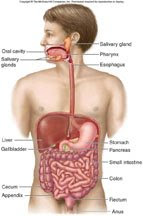
Esophagus is tube-like structure. Its length is about 25 cm, and its width is about 1.5 cm. it locates in front of the spinal column and behind the trachea and. The major function of esophagus is passing food from mouth into stomach. There is no digestive process within esophagus. The movement of food passes throughout esophagus by muscular contraction, which even can move food against gravity. The transformation of food within esophagus takes around 10 seconds. At the end, it gets rid of food to stomach by cardiac sphincter.

Digestion starts in mouth. The function of mouth in the digestion is to break down the large bulk of food into small ones by chewing. Salivary glands aid the breaking down the food by lubricating the food with salvia. These glands digest carbohydrate from long chains into small ones. For example, it digests the polysaccharide into disaccharide maltose. This digestion done by enzyme secreted by these glands, which is called "Salivary Amylase". In human, because of not chewing food efficiently, carbohydrates need over-digestion.